
Human Social Behavior
The "Who, Where, and When"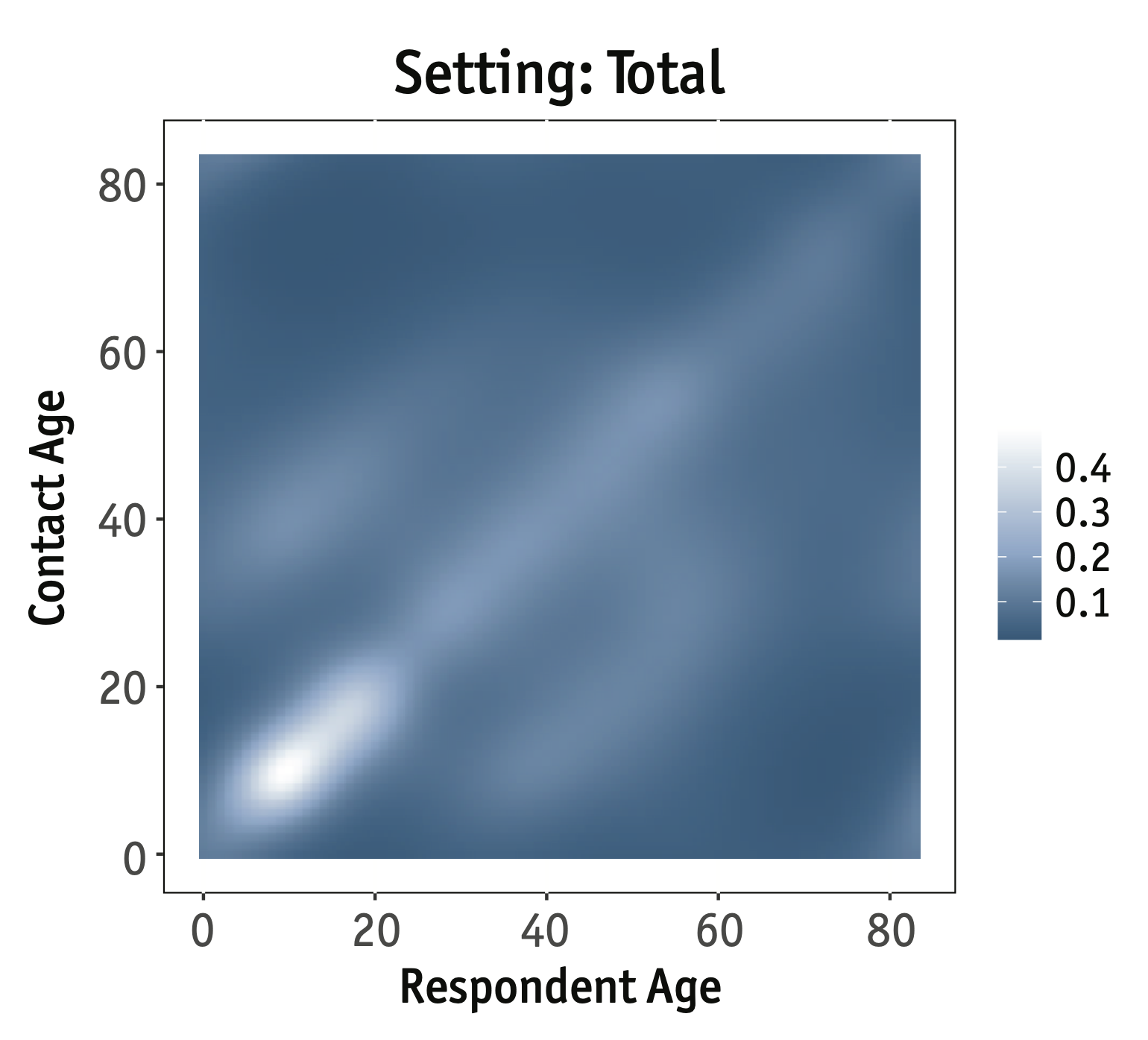
Why Human Social Behavior?
Transmission is not just a biological event; it is a social one. Whether a respiratory pathogen spreads or a mosquito-borne pathogen infects a host depends on where people go, when they are there, how long they stay, etc. Our research aims to quantify the behavioral and socio-economic drivers of contact and exposure. By understanding these human signatures, we can identify high-risk groups and support the design of more effective and equitable public health interventions.
Research Topics
- Social Mixing Patterns for Respiratory Pathogens. We quantify how people interact in the post-pandemic landscape through large-scale, nationally representative surveys that map contacts across age, sex, race/ethnicity, and income levels in the United States. By identifying how social structures (such as remote work versus in-person attendance) and specific settings like schools and workplaces drive social mixing, we characterize the behavioral patterns that drive pathogen spread.
- Exposure to Mosquito Vectors. Exposure to mosquito-borne diseases is primarily driven by the temporal overlap between human behavior and vector activity. We investigate these diel and seasonal overlaps across different population groups and mosquito vector species. By identifying socio-economic heterogeneities in the risk of exposure, our research at the CEPH Lab aims to inform targeted public health education programs and vector control strategies.
Approach
We combine different data streams to paint a comprehensive picture of human behavior. These include the direct collection of data (e.g., through diary-based contact surveys and the deployment of mosquito traps) or the analysis of individual-level datasets (e.g., American Time Use Survey).
Impact
- Epistorm-Mix: Providing an open-access resource for the post-pandemic US contact landscape to serve as a nationally representative empirical benchmark for how the population mixes.
- Human-Vector Interaction: Quantifying the heterogeneous risk of mosquito-borne infection by demographic group to improve health equity through our collaborations with public health authorities such as the Miami-Dade County Mosquito Control Division, Maricopa County Environmental Services, Greater Los Angeles County Vector Control District, and New Orleans Mosquito, Termite and Rodent Control Board.
Funding
- Our research on social mixing and behavioral drivers is supported by the CDC through Epistorm initiative.
- Our work on human-vector activity overlap is supported by the NSF.
References
-
Litvinova M, Sinclair S, Kummer AG, Ventura PC, Foster T, Shioda K, Halloran ME, Vespignani A, Ajelli M.
Epistorm-Mix: Mapping Social Contact Patterns for Respiratory Pathogen Spread in the Post-Pandemic United States. Preprint available online on medRxiv. 2025
-
Ventura PC, Wilke ABB, Chitturi J, Kummer AG, Agrawal S, Vasquez C, Gonzalez Y, Litvinova M, Mutebi JP, Ajelli M.
Unveiling the role of mosquito and human diel activity patterns in the risk of mosquito-borne disease infection. Preprint available online on medRxiv. 2024